
October brought extraordinary moments of discovery for City to Sanctuary students, and November is already unfolding with new adventures. From holding wild birds to uncovering tiny creatures beneath the surface of a pond, students are experiencing science firsthand: observing, questioning, investigating, and developing their own relationships with the natural world.
October: A Little Bird, a Lasting Memory
More than 270 public school students visited Westmoreland Sanctuary in October, exploring bird biology, migration, habitats, and conservation through hands-on bird-banding activities.
Guided by naturalists, students learned how scientists safely capture, identify, measure, band, and release wild birds. They explored how physical features such as beak shape, feathers, and body size relate to a bird’s adaptations, habitat, and survival.
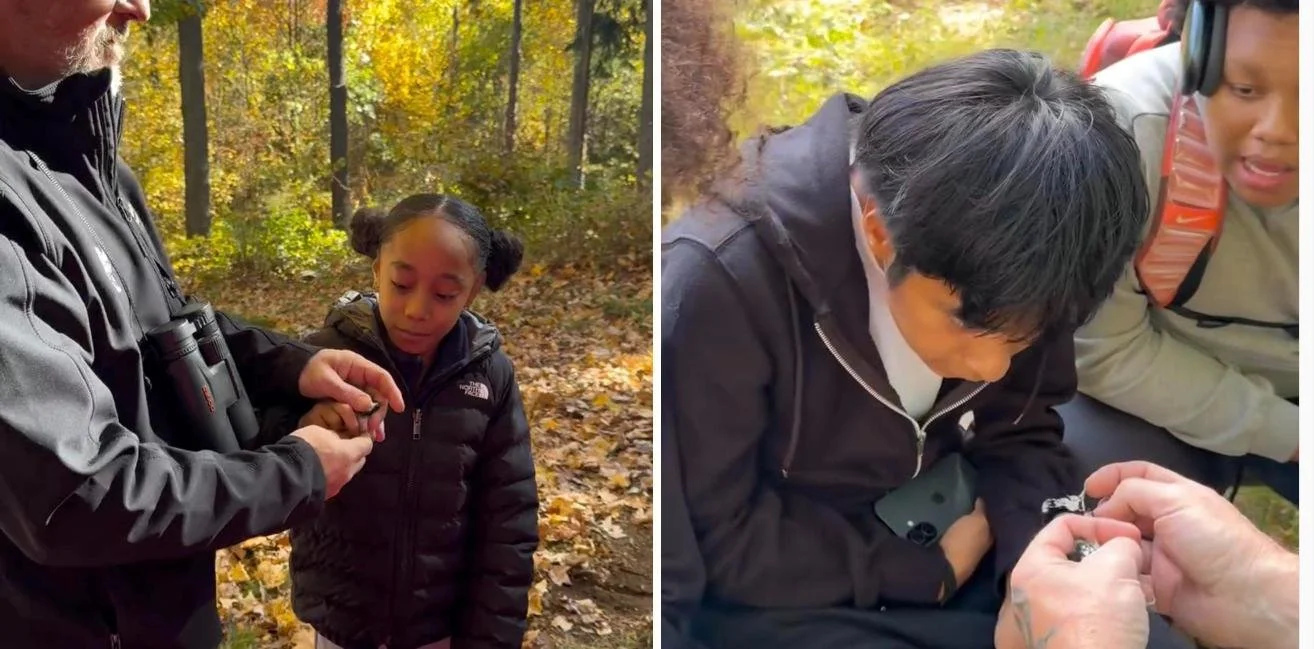
Bird banding also introduced students to an important scientific practice: collecting information over time. By placing uniquely numbered bands on birds, researchers can study their movements, migration patterns, longevity, and population health. Students discovered how studying birds helps scientists better understand the health of entire ecosystems.
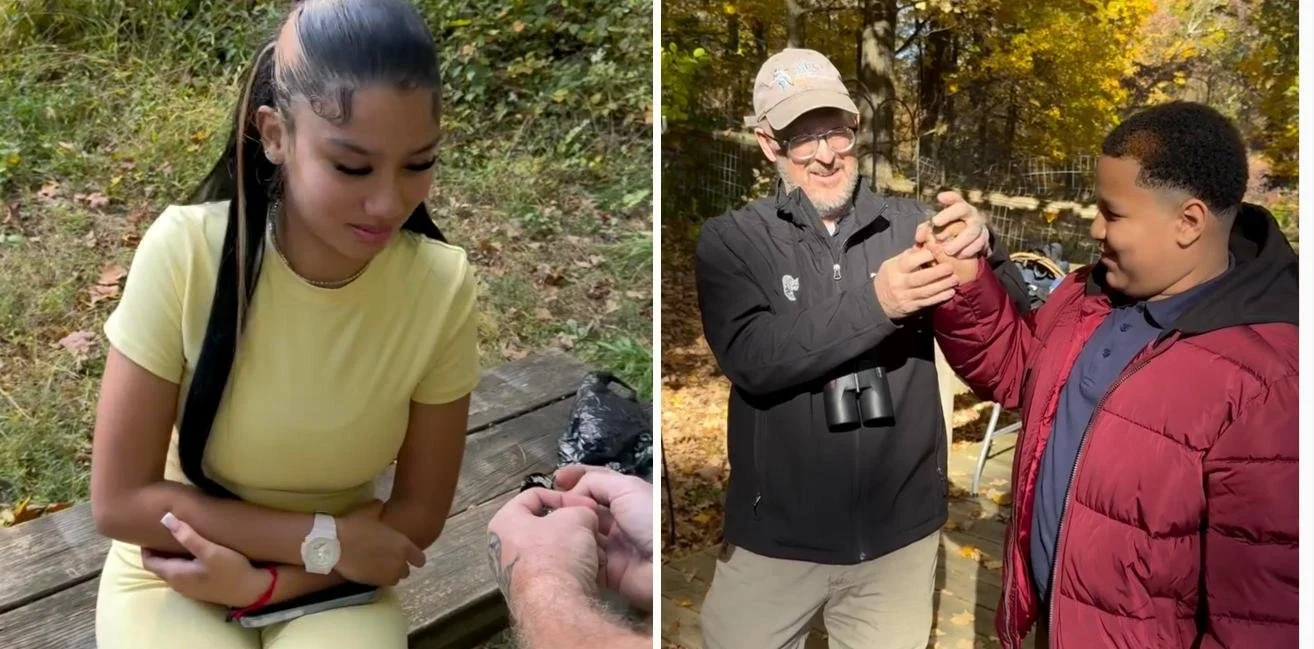
Some students had the remarkable experience of releasing a wild bird themselves. One child described the experience:
“I have never touched a bird in my entire life. This memory is going to stay in my head forever. It was something magical.”
Another student was so captivated that she began asking her teacher where she could continue learning about birds in New York City.
And when another child learned that the next sanctuary visit was a month away, he exclaimed:
“30 days? 3 and 0? That is a long time to count!”
November: A Whole World Beneath the Water
November is bringing students face-to-face with an entirely different ecosystem.
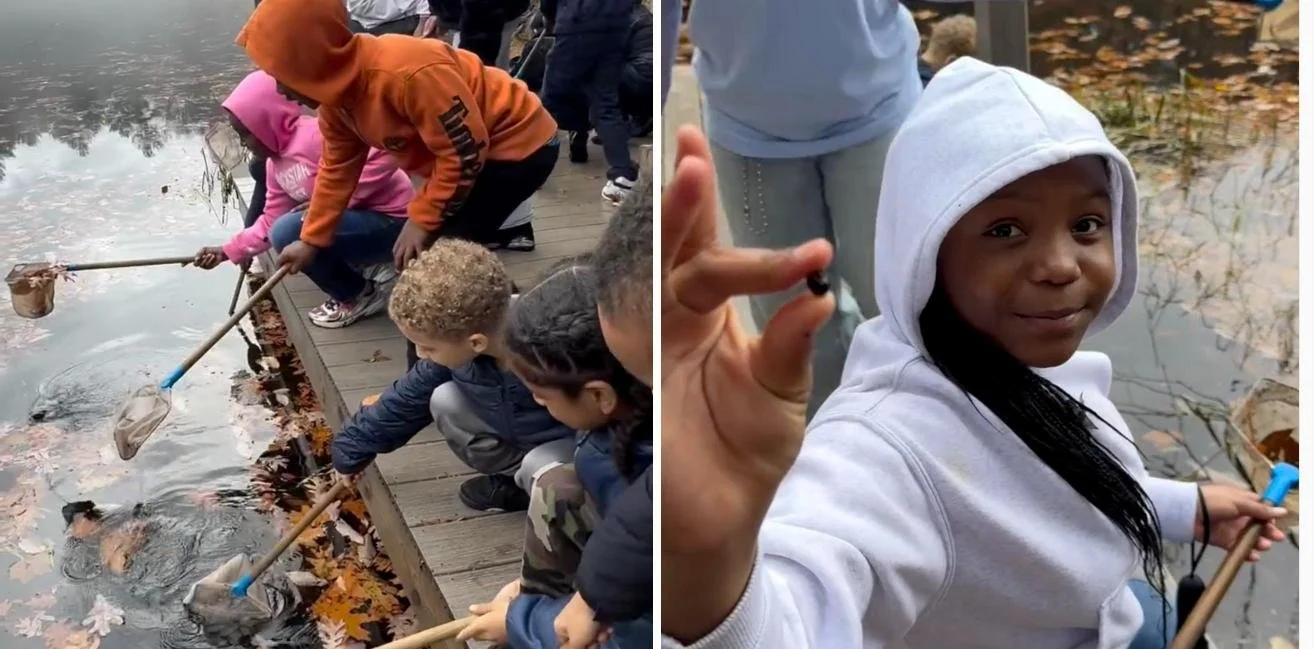
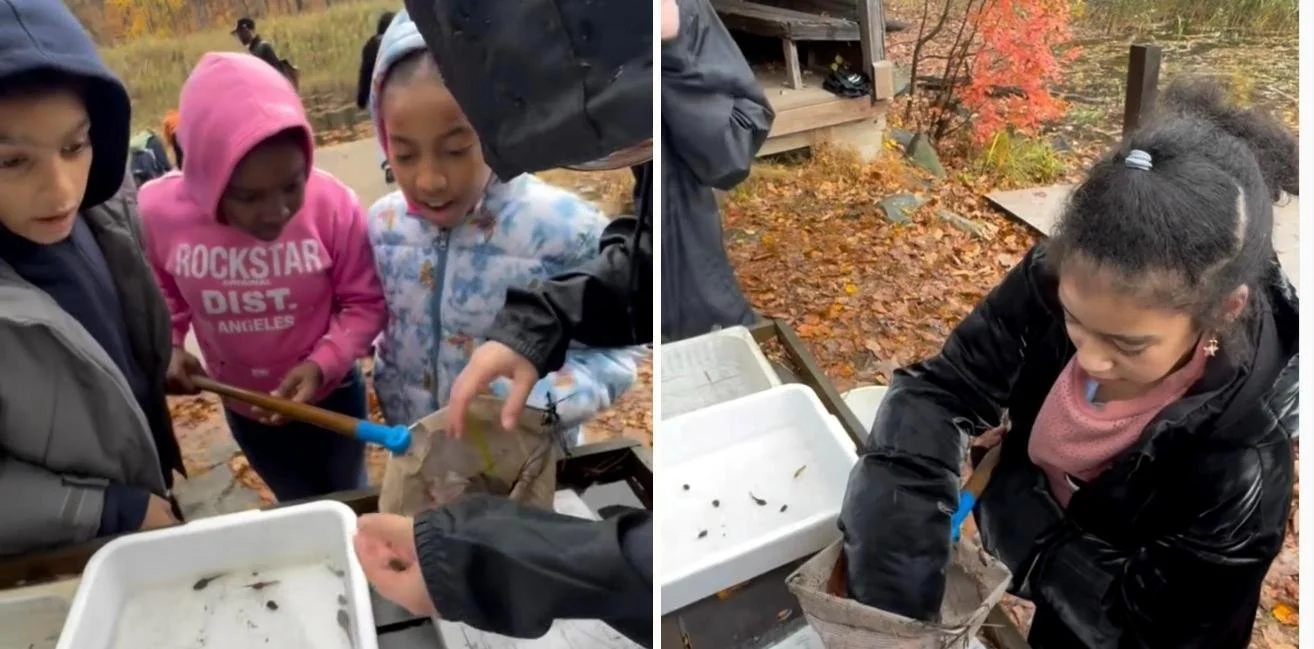
Students became pond ecologists, using nets to collect and examine crayfish, tadpoles, dragonfly nymphs, water scorpions, juvenile sunfish, pond skaters, and the larvae of dobsonflies and alderflies.
Working with naturalists, students learned how to use microscopes to observe anatomical details that are difficult to see with the naked eye.
Their discoveries opened opportunities to investigate aquatic food webs, predator-prey relationships, life cycles, and the remarkable adaptations that allow organisms to survive in freshwater habitats.
Dragonfly nymphs, for example, spend much of their lives underwater before emerging as flying adults. Pond skaters use water’s surface tension to move across the pond without sinking. Crayfish play important roles in freshwater food webs, feeding on a variety of organisms and organic matter while also serving as prey for other animals.
And the crayfish? They definitely stole the show!
Students also explored biomimicry, the practice of studying nature’s structures and processes to inspire human designs and technologies. By examining how organisms move, protect themselves, and interact with their environments, students began to see the natural world not only as something to study, but also as a source of ideas and solutions.
From the excitement of catching something in the water to the amazement of examining it up close, this was science students could touch, explore, and experience for themselves.
Learning That Grows With Every Visit
What makes these experiences especially meaningful is that they are not isolated field trips.
City to Sanctuary brings students back to the same natural environment month after month throughout the school year, creating opportunities for learning that deepens with time.
Across visits, they encounter interconnected scientific ideas: adaptation, biodiversity, life cycles, ecological relationships, and the ways living things respond to seasonal changes.
The sanctuary becomes a place where students can practice the habits of scientific inquiry: making observations, asking questions, gathering evidence, comparing findings, and developing explanations.
It also becomes familiar territory. Students recognize trees, trails, ponds, and wildlife. They notice changes that might escape a first-time visitor. Their questions become more specific, and their understanding of the environment grows more complex.
These experiences connect classroom learning with direct observation while offering opportunities for collaboration, problem-solving, patience, and independent exploration.
And something happens beyond the academic learning.
Children want to name the trees. They remember the birds. They count the days until they can return.
They’re not simply learning about nature. They’re developing a relationship with it.
What we believe
Regular access to nature is foundational to healthy child development.
It belongs in public education, not as an occasional enrichment activity, but as a consistent part of children’s learning and growth.
GivingTuesday: 30 More Children, a Full Year of Nature
This GivingTuesday, December 1, we’re inviting our community to help bring 30 more New York City public school children into nature.
Your support helps make this possible for students in Title I public schools by funding transportation, naturalist-led learning, and the coordination that brings these experiences within schools’ reach.
Help 30 more children find their place in nature.
Join our GivingTuesday campaign →
Together, we can change the course of a childhood.